
SEVERE RARE DISEASES
Impact-driven innovation
Delivering innovative, differentiated solutions for patients with rare and underserved diseases
Autosomal dominant polycystic kidney disease (ADPKD) is a rare, severe, and progressive disease that can substantially reduce quality of life and, for many people, ultimately leads to kidney failure.
With limited treatment options available, there remains a significant unmet need for therapies that are effective, well tolerated, and able to slow or stop disease progression.
SCYNEXIS is committed to advancing solutions to help address this unmet need for people living with ADPKD.
(ADPKD) is a genetic disorder caused by mutations in PKD1 or PKD2 genes, leading to dysfunction of polycystin proteins and abnormal renal tubular signaling.
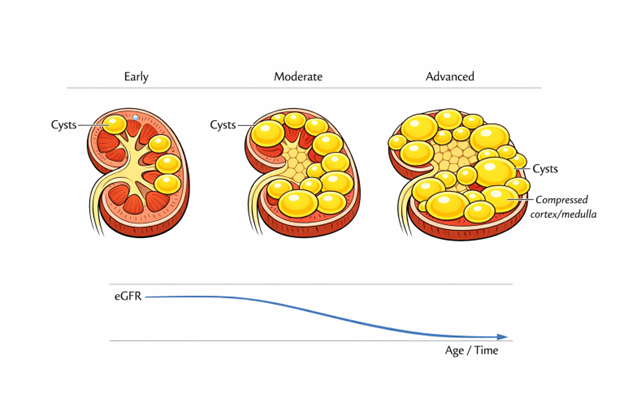
The disease is characterized by progressive cyst formation, kidney enlargement, and eventual loss of renal function.
*eGFR (estimated glomerular filtration rate) is a measure of kidney function.
Stages of Cystic Kidney Disease: Structural Progression and eGFR Decline
ADPKD: Significant Burden and Unmet Need

Large orphan indication
~140,000 diagnosed patients in the United States; ~6,000 new cases annually

Chronic, progressive disease with severe outcomes
Progressive kidney dysfunction, with ~50% of patients progressing to end stage renal disease requiring dialysis or kidney transplantation

High unmet need and limited treatment options
No therapies address the underlying disease biology; the only approved therapy (tolvaptan) is significantly limited by safety and tolerability

Substantial impact on survival and quality of life
- Chronic kidney pain, hematuria, and recurrent infections
- 1.8-5.4x increased risk of all cause mortality
- Meaningful reduction in physical function, productivity, and social participation

SCYNEXIS is committed to advancing solutions for people living with ADPKD
We are developing SCY-770, a novel AMPK activator designed to target multiple pathways involved in ADPKD progression with the potential to become a much-needed treatment option for this severe condition.
AMPK activation has shown to potentially impact ADPKD progression in several ways:
- Reducing epithelial cyst cell proliferation
- Reducing cyst fluid secretion
- Normalizing glycolisis dysregulation
- Reducing inflammation and fibrosis