

Our Science
From molecule to
medicines, driven by
innovation
Changing the course of severe rare diseases
AMPK activation: restoring cellular growth and energy balance
AMP-activated protein kinase (AMPK) is a fundamental regulator of cellular growth and metabolism. By modulating key networks such as the mammalian target of rapamycin (mTOR) and mitochondrial function, AMPK activation offers a disease-modifying approach for conditions driven by abnormal cell growth signaling and metabolic dysfunction.
Reduced AMPK signaling has been associated with progression of autosomal dominant polycystic kidney disease (ADPKD), the most common genetic disorder leading to kidney failure. By targeting multiple drivers of cyst growth, AMPK activators have the potential to slow disease progression and preserve kidney function making them a promising target for novel therapeutics.

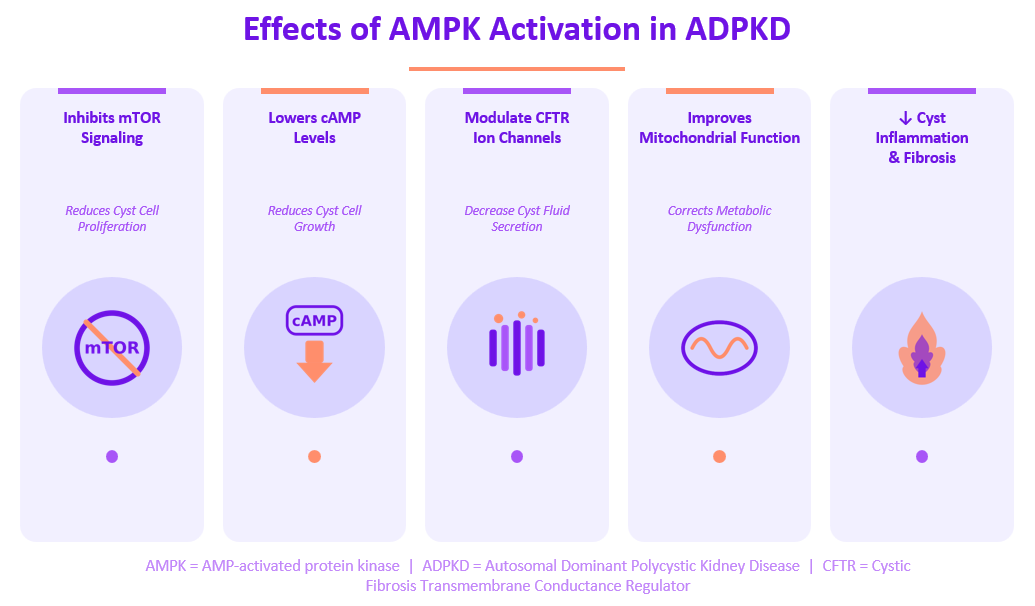
AMPK activation has the potential to modify many of the pathophysiological aspects associated with cyst growth in ADPKD:
- Inhibits mTOR signaling → reducing cyst epithelial proliferation
- Reduces cAMP levels → reducing cyst epithelial proliferation
- Modulates ion channels (e.g., CFTR) → decreasing cyst fluid secretion
- Improves mitochondrial function → corrects metabolic dysfunction
- Reduces Cyst inflammation and fibrosis
AMPK activation is a potential target for other diseases such as Adrenoleukodystrophy (ALD) and other conditions involving metabolic dysregulation.
Autosomal dominant polycystic kidney disease (ADPKD)
SCY-770 for ADPKD
Triterpenoid antifungals: addressing the global threat of antimicrobial resistance
Triterpenoid antifungals (fungerps) are glucan synthase inhibitors with a broad spectrum of antifungal activity by disrupting fungi cell wall formation.
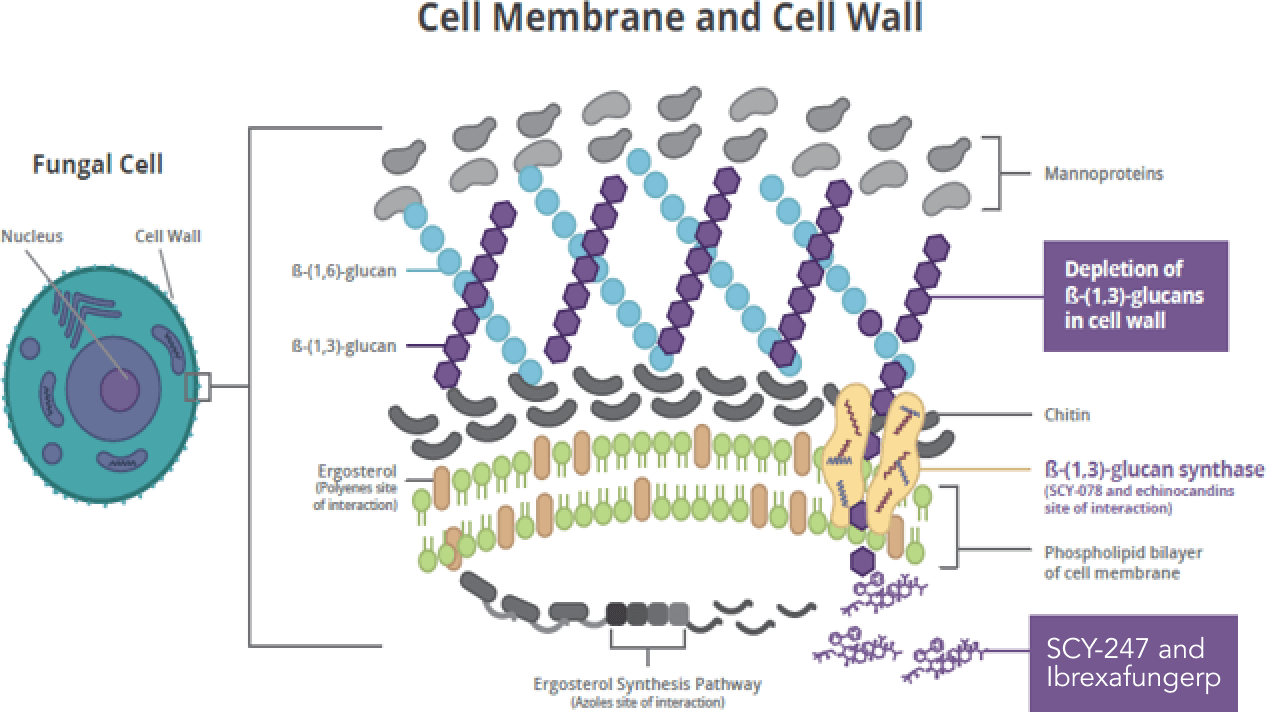
- Validated Mechanism of Action – inhibition of glucan synthase
- The MOA (glucan synthase inhibition) has been previously validated as a clinically relevant target by the echinocandins
- Differentiated binding vs. echinocandins
- Due to the different structure and enzyme-inhibition properties, fungerps retain activity against the majority of echinocandin-resistant strains
- Inhibition of the synthesis of β-(1,3)-D-glucan, an essential component of the fungal cell wall of many pathogenic fungi, results in cytological and ultrastructural changes in the fungi compromising their ability to survive
- Disruption of the fungal cell wall is fungicidal against Candida spp.
- No cross-resistance with azoles
- The fungal cell wall is a unique target not encountered in mammalian cells, which provides for the good safety profile of the fungerps and other glucan synthase inhibitors (limited risk for “off-target” effects, such as human cell toxicity)
Antifungal triterpenoids
Learn MoreInterested in our clinical trials?
Find out more about what trials are going on presently.
Learn MoreOur Data
SCYNEXIS regularly presents key infectious disease study data at top medical meetings.
Learn More